Is Online Marriage Coaching as Effective as In-Person Therapy?
Why years of therapy and counseling didn't work — and why couples are choosing marriage hacking instead.
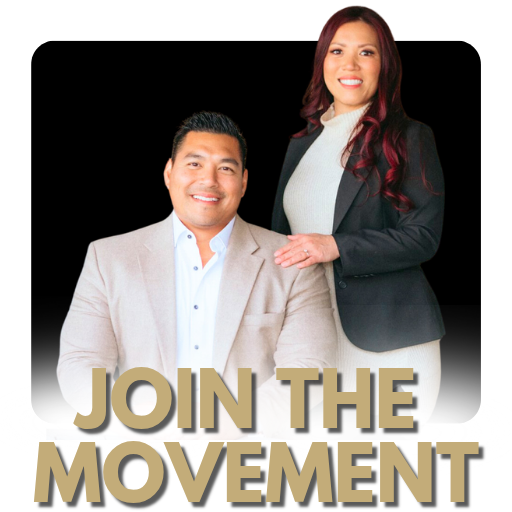
By Maddox Vic & Stephanie Sripetch | The ULTIMATE Marriage Hack™
You've probably already tried something.
Therapy. A book. A retreat. A pastor. A podcast. Maybe all of them.
And yet here you are — still asking questions. Still feeling like something is missing. Still wondering why the same patterns keep showing up no matter how hard you try.
I want to tell you something important before we go any further:
That's not a you problem. That might be a ceiling problem.
And by the time you finish reading this, you're going to understand exactly what I mean — and why the answer surprised even us.
Quick answer: Yes — for most couples, online marriage coaching can be more effective than in-person therapy, but not because of convenience. It's because of speed of transformation (rewatchable video lessons vs. one-hour sessions you forget by the car ride home), whole-family involvement (your spouse and kids can grow together on the same screen, not just one partner in one room), and lived-experience teaching (learning from people who've actually walked through what you're walking through, not just studied it). It also matters whether the coaching is built around the 100% highest standard, not the lower 75% standard most therapy and certified coaching programs are trained to deliver. Below, we break down exactly why — including two real client stories and the standard most therapy never reaches.
What Traditional Marriage Therapy Actually Delivers
Before I say anything else — therapy has helped a lot of people. I'm not here to tear it down. And a truly strong bible-based therapist is incredibly valuable. The problem is, they're rare. Hard to find. Often you have to go through several therapists — sometimes years of trial and error — before you find one who's actually operating at a 100% standard.
But there's something our clients keep telling us. Something that kept coming up so consistently that we couldn't ignore it anymore.
After years of counseling — sometimes a decade or more — they all described the same experience:
They were getting better at managing their marriage.
Not healing it. Managing it.
And here's what nobody told them: those are two completely different destinations.
Keep reading. Because understanding the difference between the two is going to change how you see everything.
The 4 Marriage Standards Scale: 30%, 50%, 75%, and 100%
Most couples think there are two options:
Bad marriage. Good marriage.
But what if there are actually four — and almost no one in the professional world is teaching the highest one?
Here's the framework we use:
30 percenters. Survival mode. High conflict. Normalized chaos. Some people know they're here and desperately want out — but they don't know how to get out, so they normalize it.
50 percenters. This is where the divorce rate lives. Functional. Mostly polite. But quietly disconnected. Getting through the day, not through life together. They want more out of their marriage — they just don't know what "more" actually looks like.
75 percenters. The 75% standard is what therapy, books, seminars, and most certified coaching programs are built to deliver. This is what culture teaches marriages should look like. And when a couple moves from a 30 to a 50 or 75, it feels like they've won the lottery. It genuinely does.
But here's what no one tells them.
They've learned to manage problems they didn't have to keep having.
And the professionals who helped them get there — many of them with decades of experience and walls full of degrees — often don't know there's a higher level. Because their training didn't go there.
100 percenters live in a different category entirely. These aren't perfect marriages. They're marriages where the conditions that create the problems have been dismantled — not just managed.
That's what we teach. Not because we invented it. Because Jesus put it in front of us, and it would be wrong to keep it to ourselves.
Now here's where it gets really interesting.
Online Coaching vs. In-Person Therapy: Why Format Matters
Let's get back to the original question: is online coaching as effective as in-person?
Wrong question.
The better question is: which format gives transformation the best chance to actually stick?
Think about what happens after a therapy session.
You hear something meaningful. You leave. By the time you're in the car, you and your spouse have already interpreted it slightly differently. By next week, it's mostly gone. And you come back and rebuild from almost zero.
While therapy often focuses on healing past wounds and unpacking deeper emotional patterns, marriage coaching is more action-oriented. It helps couples identify practical steps, improve communication, and rebuild trust in real time. For many couples who feel stuck, a structured marriage coaching program can provide clarity, momentum, and a faster path toward rebuilding connection than traditional therapy alone.
Now here's what happens in our program.
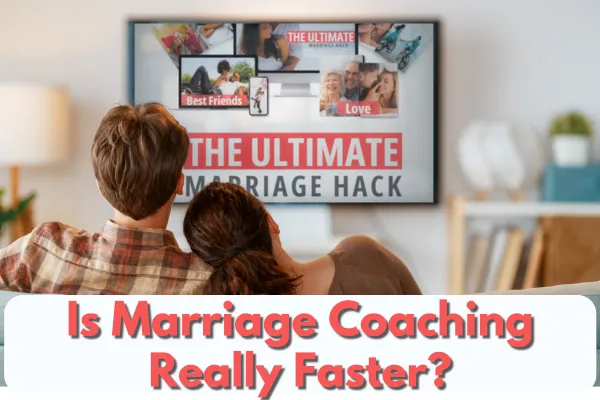
The life lessons and hacks live in videos for the family. You can rewatch them tonight. Tomorrow. Next week. You can sit on your couch with your spouse and kids, put it on the big screen in the living room, and go through it together.
No golden nuggets falling through the cracks. No misinterpretations. No falling back into old habits after a few days because the lesson faded. The epiphany doesn't land once and fade — it gets crystalized into the whole family over time.
But that's not even the most powerful part.
What If My Spouse Doesn't Want to Do This?
(The spouse who swore they'd never do this.)
Here's something nobody talks about.
What happens when one spouse is desperate to grow — and the other one isn't ready?
In traditional settings, the answer is: you wait. Or you go alone and hope it helps enough for both of you.
In our program, something different happens.
The video plays in the living room. The resistant spouse is in the kitchen. Or down the hall. And they're hearing it anyway.
They're not being confronted. They're not being dragged to a session. They're just... a fly on the wall. Listening to real stories. Hearing honesty and life lessons of what they're actually feeling and going through that doesn't feel like an attack.
We've watched the most resistant spouses in the world quietly lean in over days and weeks — not because anyone pushed them, but because nobody did.
I've watched this happen more times than I can count.
But what I'm about to tell you next is what I think matters most.
Real Results: Marriage Hacking Success Stories
I want to share two stories. Real people. Real results.
Lis had been married for 14 years. Six children. She'd spent years in therapy, read the books, watched the YouTube videos. She was cycling through lust, anger, infidelity, and spiritual emptiness — and nothing was breaking the cycle.
She came to us as an atheist.
By week one, she and her husband were on the edge of their seats going through our courses together. She described our group coaching sessions like this: "We always wondered — what golden nugget are Maddox and Stephanie going to pull out today?"
Within four weeks, she had broken every toxic habit. She and her husband healed from years of pain. They fell back in love — not back to where they were, but somewhere they'd never actually been before.
Years of therapy couldn't do what four weeks did.
Why?
Because she finally heard someone speak from experience — not a textbook. Someone who had lived through almost exactly what she was living through. And when that clicked, everything else clicked with it.
Katie was a young mother of four. Her marriage was a 3 out of 10. She joined our program in tears — not looking for help saving her marriage. Looking for tips on how to leave it with less impact on the kids.
Her husband was battling addiction, disrespect, and disconnection.
In the first week, he gave his life to Christ and made a decision to fight for his family.
Four weeks later, Katie said they were at an 8 out of 10 — and still climbing.
Now here's the thing I want you to sit with.
So, Which One Should You Choose?
I'm not asking you to abandon everything you've trusted.
If therapy has genuinely transformed your marriage — not just stabilized it — keep going. Sincerely.
But if after years of work you still feel like you're managing something instead of healing something — or the same arguments and issues keep surfacing — I want to ask you one question:
What standard have you been aiming at?
Because if you've been unknowingly working toward 75% — and 75% is the highest standard the person guiding you knows — you might be hitting a ceiling that feels like a wall. This is where couples settle and say, "This is just how our marriage is. They're never going to change. We still love each other."
The 100% marriage standards scale isn't about perfection. It's not about becoming someone you're not. It's about discovering that the patterns you've been managing weren't permanent. They were just the result of living below a standard you didn't know existed.
That's the burden God has put on our hearts to share.
Not to condemn anyone who's tried. Not to diminish anyone who's helped.
Just to say: there's more available than we've been told our whole lives.
Frequently Asked Questions
Is online marriage coaching as effective as in-person therapy? For many couples, yes — and often faster. Online coaching built on rewatchable video lessons and whole-family involvement can help lessons stick in a way single in-person sessions often don't.
What's the difference between marriage coaching and marriage counseling? Counseling tends to focus on processing the past and managing present conflict. Coaching — especially marriage hacking — focuses on giving couples a higher standard to grow toward, not just tools to cope with where they are.
How fast does online marriage coaching work? Every couple is different, but several of our clients have seen real, measurable change within four weeks — after years of traditional therapy that left them only "managing" their marriage.
What if my spouse refuses to do marriage coaching with me? Our format is built for this. Video lessons playing in a shared space let a resistant spouse absorb the message gradually, without ever feeling confronted or forced into a session.
The Bottom Line
Online coaching, when it's rooted in lived experience, built for the whole family, and focused on the 100% highest standard ceiling — isn't a lesser version of support.
For a lot of families, it's the first version that actually worked.
Not because it's online.
Because it finally aimed at the right target.
Maddox Vic & Stephanie Sripetch are the creators of The ULTIMATE Marriage Hack™. Everything they teach comes from lived experiences, life epiphanies, and Godly revelation
Got a Question You're Too Afraid to Ask?
We created our Asking for a Friend™ Series for exactly that reason — because the questions people are most afraid to say out loud are usually the ones that matter most.
Every episode, we answer real questions from real couples. No judgment. No shame. Just honest answers from people who've been there.
Have a specific question you want us to answer? Let us know. We read everything.
📧 [email protected] 📱 Instagram: @the_ultimate_hack | @MaddoxVicOfficial
Connect With Us
Thank you for reading.
Our mission is simple: to help couples experience deeper unity, stronger intimacy, lasting harmony fast.
If this article helped you, we'd love to here how it helped. Tell us at.
Instagram: @MaddoxVicOfficial
Youtube: @MaddoxVicOfficial
Facebook: https://www.facebook.com/vic.sripetch
Website: https://theultimatemarriagehack.com/
Support Email: [email protected]
For additional marriage resources, articles, training, and coaching opportunities, explore the rest of The ULTIMATE Marriage Hack™ Knowledge Base.
We're rooting for your marriage.
— Maddox Vic & Stephanie Sripetch
The ULTIMATE Marriage Hack™